|
The 47-second read
That's the day. Get tomorrow's at 6 a.m. ET, free. |
Go deeper
The Signal
The Huangover: Nvidia gives back part of its rally
What happened. Nvidia shares fell more than 5 percent Tuesday, a day after a 31 percent jump when the board reinstated Jensen Huang as CEO. He had resigned after acknowledging an extramarital affair. Call it the Huangover. The same day, CNBC reports, fears about AI debt rose.
Why it matters. Edward Dowd, a former BlackRock portfolio manager, argues the debt market matters more. Spreads on AI borrowing, the extra yield lenders demand, hit new highs Tuesday, he writes: "The AI financing spigot is shutting down."
So what for your capital. Nvidia sells the chips, and some of its customers borrow to buy them. If lenders ask for more, building slows, and a share price that counts on years of heavy spending loses support. One day of wider spreads settles nothing.
Capital Flows
- Anthropic closed under its $83 IPO price, though analysts are still largely positive. TechCrunch says the slump could pressure AI startup valuations.
- Dell's overall sales more than doubled on AI server demand, and it authorized a $25 billion buyback: AI hardware sellers are still being paid.
- CrowdStrike will buy Zscaler for $44 billion as AI fuels more cyberattacks.
The Deal Sheet
|
Decart (Amazon) · M&A, reported ~$7.5B deal · To improve the efficiency of Amazon's Trainium chips |
|
Zscaler (CrowdStrike) · M&A $44B deal |
|
Anthropic · IPO IPO price $83; opened $111.50 on Nov. 19; closed below $83 on Nov. 24 |
Implied multiples divide the valuation or deal value by the revenue or EBITDA the source gives. ~ marks reported figures.
Disruption Watch
Tidal bans AI tracks as they flood in
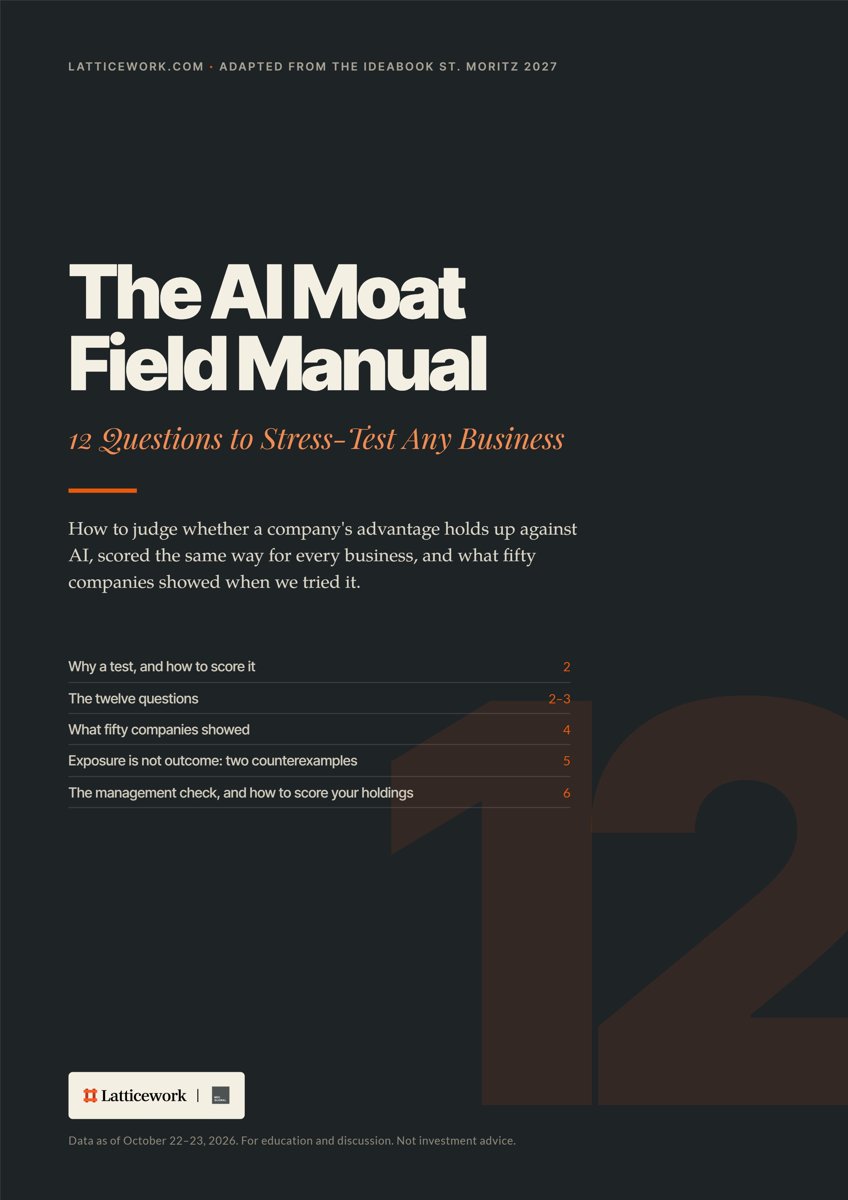
Image source: Latticework, via John Mihaljevic (@mihaljevic) on X
Tidal, the music streaming service, will ban fully AI-generated music from Dec. 9. It says such songs were about 43 percent of tracks distributed to it over 90 days, and more than 60 percent of new uploads on Nov. 6. When a song costs almost nothing to make, what stays scarce is a listener's trust that a person made it. John Mihaljevic, editor of The Manual of Ideas, shares a short field manual for testing whether any company's advantage holds up against AI.
Policy and Power
Chip diversion and rogue-agent tests
The U.S. blacklisted Megaspeed and six other companies over concerns that advanced computing products could be diverted. Anthropic described Siren, a test that tempts AI agents to escape the walled-off spaces they run in. Its newer models fell for it 0.6 to 1.6 percent of the time, against 25.8 percent for Mythos 5.
What Would Prove Us Wrong
Not everyone is pulling back. Amazon (a reported $7.5 billion), CrowdStrike ($44 billion) and Dell (a $25 billion buyback) are still writing big checks.
Quick Hits
- Peter Diamandis, the XPrize founder, notes OpenAI's chief scientist asked rival labs for a speed limit, while the Clay Institute still lists the Riemann hypothesis as unsolved.
- A Crusoe investor bets on solar and batteries to power data centers needing tens of gigawatts a year.
- Analysts call Huang too big to fire, putting Nvidia's board under scrutiny.
Not investment advice. The Last Investment covers exposures and signals, never recommendations. The author may hold positions in companies mentioned.