|
The 47-second read
That's the day. Get tomorrow's at 6 a.m. ET, free. |
Go deeper
The Signal
Anthropic lists as Nvidia falls a seventh week
What happened. Anthropic, the company behind the Claude AI models, sold 1.127 billion shares at $83 and raised $93.5 billion, the largest IPO on record. It closed at $97.17 on its first full day, 17 percent above the IPO price. The same week Nvidia's stock fell 14 percent and closed out seven straight losing weeks, its longest streak since 2008.
Why it matters. François Chollet, an AI researcher, offers a test. Had you bought Nvidia in June 2024 knowing its earnings would grow 4.5 times, you would be down 5 percent today. The Wall Street Journal argues that Anthropic shares are a rational bet on the next phase of AI. Verdad Capital, an investment firm, asks whether customers will come for all the computing power being built.
So what for your capital. Nvidia's business did what its buyers hoped. Its share price had already counted on it. Anthropic's new owners are paying for growth that has not happened yet, and CNBC flags getting enough computing power as the big open question for the business.
Capital Flows
- Dell, HPE, Lenovo and Supermicro are reportedly demanding much higher prices for AI servers, months after buyers signed contracts → for now, the hardware makers have the upper hand.
- Amazon is reportedly nearing a $7.5 billion deal for AI startup Decart, which the Financial Times says would help Amazon's cloud business compete with Nvidia → a big Nvidia customer is paying to rely on it less.
- Anthropic's seven founders each took $280 million in the IPO, nearly $2 billion in all → they turned part of their stakes into cash at the price new buyers paid.
The Deal Sheet
|
Anthropic · IPO $93.5B raised · 1,127,000,000 shares at $83 incl. greenshoe; closed $97.17, 17% above IPO price |
|
Decart (Amazon) · M&A, reported ~$7.5B deal · talks advanced; could come together as soon as next week |
|
Zscaler (CrowdStrike) · M&A, reported in talks; Zscaler stock up 18% |
|
Science · VC round $400M raised · brain-computer interface company |
|
SatSure (Antariksh Venture Capital Fund) · VC round, reported ~$7M raised · valued ~$93M post-money · part of ongoing INR2bn Series B; INR600m tranche |
|
Foundation Future Industries (Base Group) · VC round, reported ~$150M raised · investment awaited; company seeking emergency bridge loan |
Implied multiples divide the valuation or deal value by the revenue or EBITDA the source gives. ~ marks reported figures.
Disruption Watch
An AI-assisted proof of the most famous problem in math
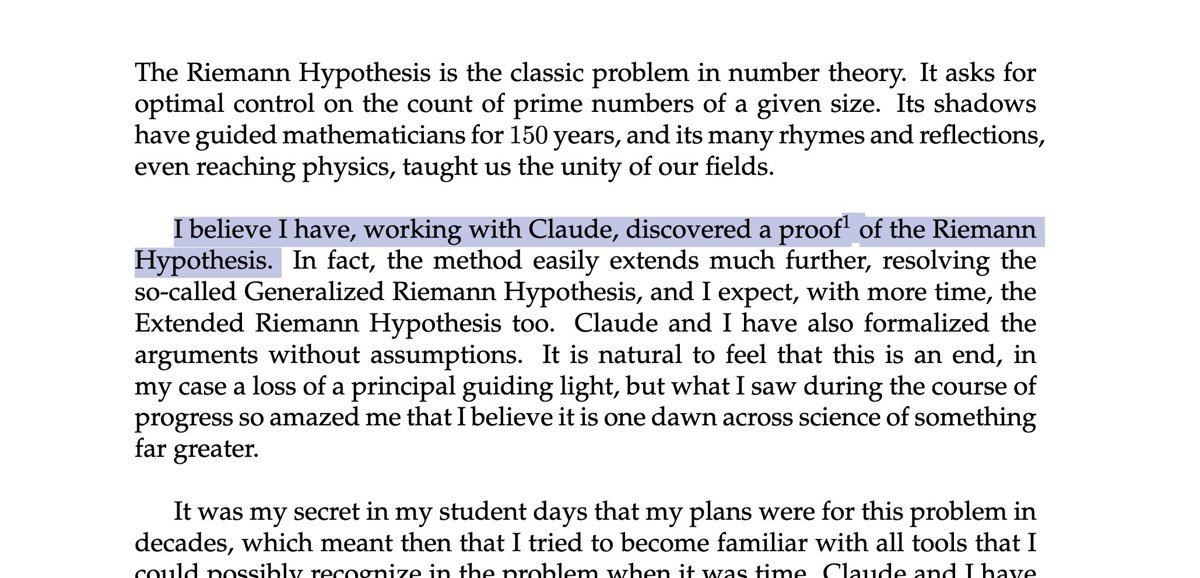
Image source: Levent Alpöge's statement on his website, sent by the editor
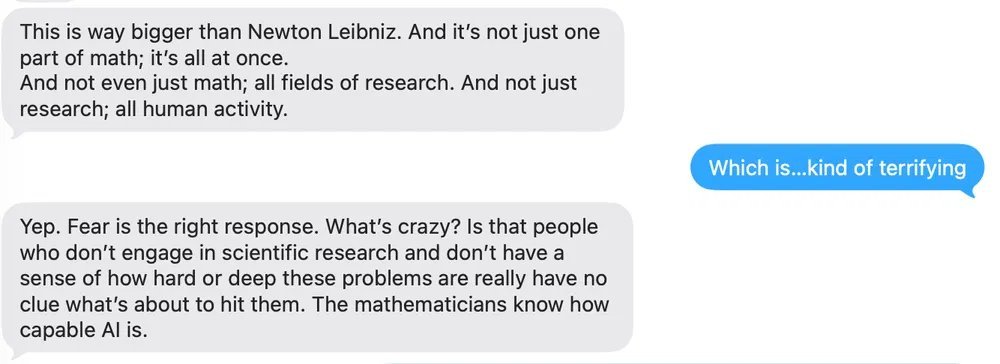
Image source: Zack Beauchamp (@zackbeauchamp) on X
Levent Alpöge, a mathematician who works at Anthropic, said on Friday that he had proved the Riemann hypothesis, the most famous open problem in mathematics, working with Claude. Independent researchers later verified the result, Scientific American reports. Taylor Brysiewicz, a mathematician at Western University, told writer Zack Beauchamp it is the beginning of a total revolution in human knowledge. In July, an X user called Myk imagined the hypothesis falling on November 21, 2026. The claim came a day early. Will Depue writes that the singularity has arrived, and the account GRITCULT lists the predictions the futurist Ray Kurzweil got right. A proof shows what the models can do. It does not show who gets paid. Fireworks AI's co-founder argues companies can mostly use cheaper open models, which would limit what the labs can charge.
Policy and Power
Chips for China, and chips in orbit
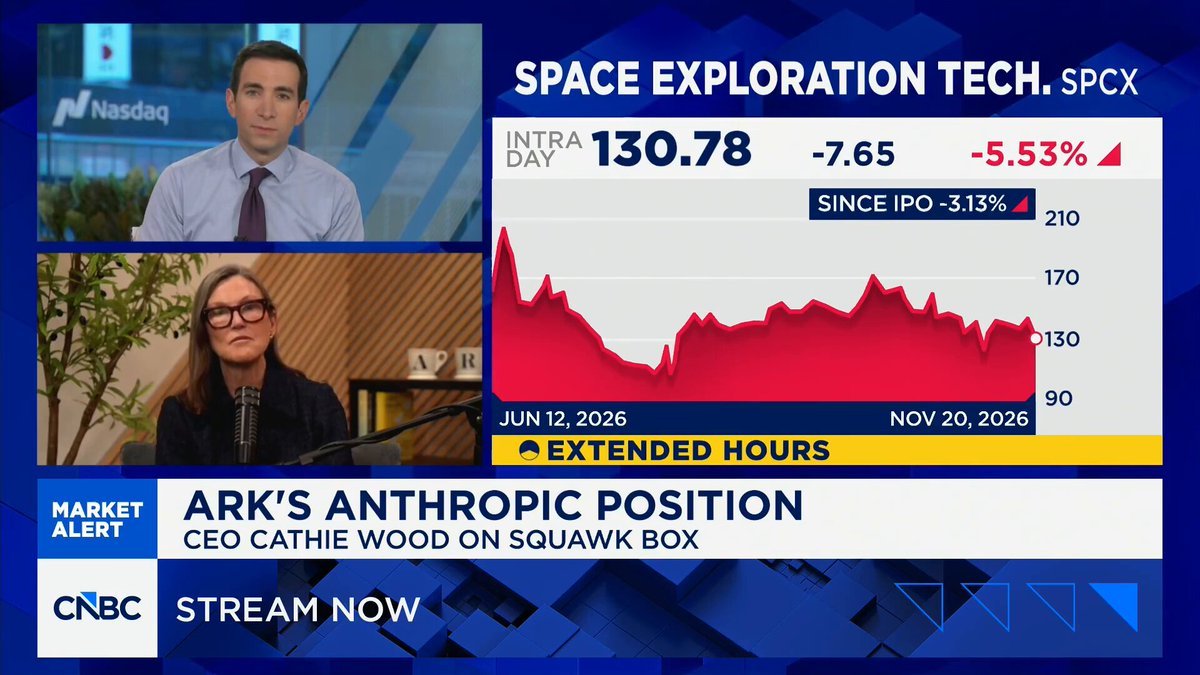
Image source: CNBC Squawk Box, via Fireside Alpha (@firesidealpha) on X
The Commerce Department approved sales of more than 879,000 AI chips to Chinese companies, Rep. Brian Mast says. SpaceX's lenders reportedly want to stop it launching $40 billion of AI chips into space, because they could not seize them if SpaceX defaulted. Cathie Wood, who runs the fund manager ARK Invest, predicts computing in orbit will cost less than on the ground within two years.
What Would Prove Us Wrong
Tech had its worst week on Wall Street since 2020, CNBC reports, yet Anthropic closed its first full day well above the IPO price. And Nvidia's fall may owe as much to the fight over its ouster of chief executive Jensen Huang as to any doubt about demand.
Quick Hits
- David Spreng of Runway Growth Capital compares AI's growing debt with the telecom bust.
- Zscaler stock jumped 18 percent on a report that CrowdStrike is in talks to buy it.
Not investment advice. The Last Investment covers exposures and signals, never recommendations. The author may hold positions in companies mentioned.