The 47-second read
- Nvidia fell 14% at Thursday's open after Jensen Huang resigned, erasing more than $600B, according to Bloomberg → The top chip builder now trades on its financing web. Startups and customers it funds are the exposed layer.
- CoreWeave is asking customers to pay up front and exploring short-term deals that could lift prices → The compute owner has pricing power while capacity is scarce. Buyers of compute carry the cost.
- SoftBank lost over $3B pre-ordering gas turbines for AI data centers → Power equipment is a real bottleneck, but paying for it ahead of demand can still lose money. Price discipline beats being right on scarcity.
That's the day. Got more time? Go deeper below.
Go deeper
Today's lead is a builder whose profits became everyone else's funding, and what happens when its leadership shakes. Below that: who owns the scarce inputs, who is paying up for them, and who sells time by the hour.
The Signal
Nvidia's investment web is now the risk
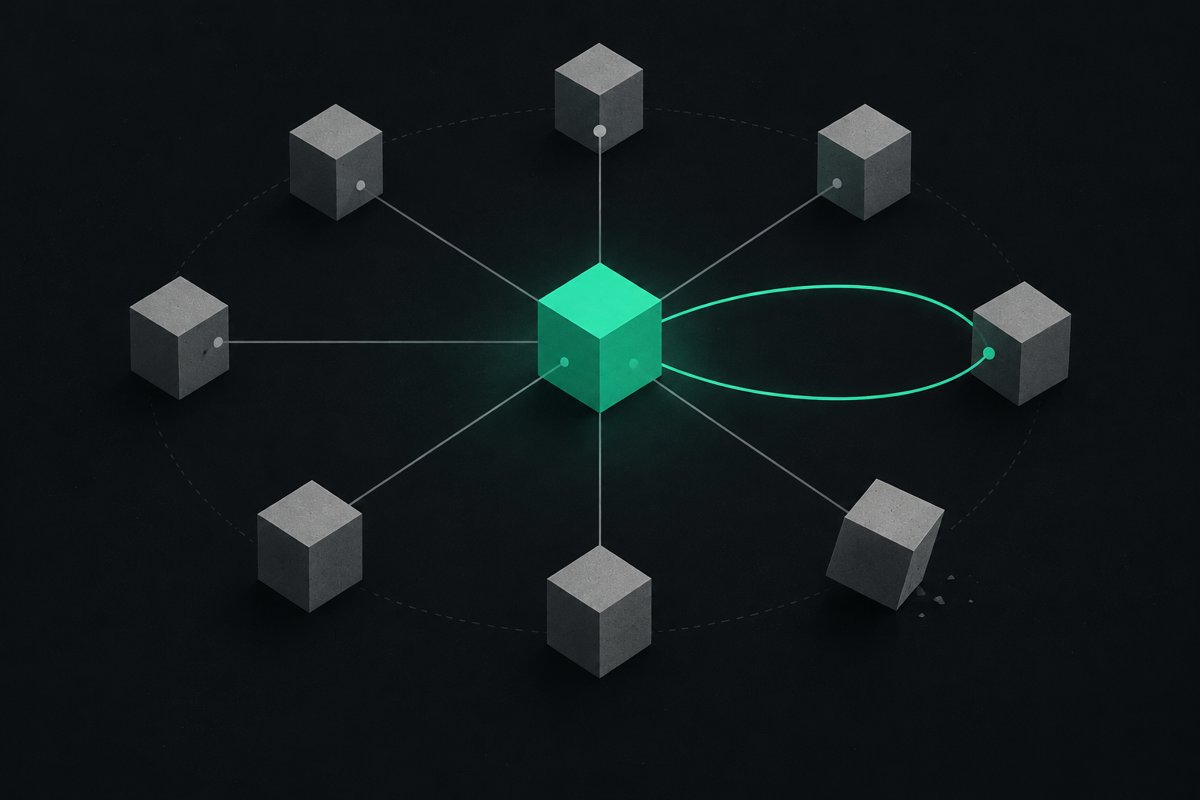
What happened. Nvidia dropped 14% at Thursday's open after Jensen Huang resigned, per Bloomberg. That erased more than $600B and pushed its market cap below $4T for the first time since 2025. The Financial Times argues that Nvidia put its profits into AI startups, suppliers and chip customers, and that this web of dependencies could now unravel.
Why it matters. A chip builder that also finances its own buyers makes demand look more independent than it is. In our cycle map, spending that depends on a supplier's balance sheet is a frenzy sign. We are not predicting a crash. The market just repriced the builder by hundreds of billions in one session on a governance shock, which shows how much confidence was in the price. No Singularity Tracker reading moved today.
So what for your capital. Exposure sits with startups, neoclouds and other customers whose funding or chip supply leans on Nvidia's checkbook. Adopters that simply buy compute are less exposed, and could benefit if financed demand cools and prices ease. Ask what the price assumed: that the builder's cash would keep funding its own customers.
Capital Flows
- CoreWeave is asking customers to pay up front, borrowing against specific contracts and eyeing short-term deals that could mean higher prices, which suggests compute owners still set terms. It does not yet move the price-of-AI-performance reading.
- CoreWeave jumped more than 24%, its best day since April 2025, after a strong Q3, while neoclouds had faced scrutiny this month over the sustainability of the AI trade, so sentiment on compute swings hard in both directions.
- SoftBank lost over $3B pre-ordering natural gas turbines for AI data centers, and TechCrunch says it may cap gas ambitions, a reminder that a scarce input can still be overpaid for.
Disruption Watch
Consulting's billable hour meets the machine
CNBC reports that AI is forcing consulting firms to rethink billable hours and the graduate career ladder. Law is facing the same question: the chief executive of Australian firm Gilbert + Tobin discusses rethinking the business of law with AI, though that conversation is published by an AI vendor and should be read as a claim. Both industries sell cognitive work priced by the hour and the head. The graduate pipeline is the part to watch: if entry-level hiring shrinks, it would show up first in labor's share of output. So what: hourly-priced professional services are the exposed sellers, and firms that can sell outcomes, liability or licensed sign-off are better protected than those selling hours.
Policy and Power
The Huang scandal reaches export policy and the DOJ
The scandal around Huang is reviving calls to tighten China's access to advanced AI chips, just days before the Trump-Xi summit, according to CNBC. Separately, two administration officials told Semafor that multiple DOJ probes could sweep up Nvidia: one on antitrust grounds, two involving Megaspeed and Supermicro. For chip sellers, regulatory risk is now a pricing input alongside demand.
What Would Prove Us Wrong
The strongest case against our view: infrastructure may be keeping the value this time. CoreWeave had its best day in over a year on a strong quarter and is demanding prepayment and exploring shorter contracts that could raise prices, which is what scarcity looks like. Nvidia's drop is also tied to a leadership scandal, not to any sign that demand has cracked. If compute stays scarce and pricing power keeps rising, the pattern of infrastructure lagging the users may not hold. The counterpoint
Not investment advice. The Last Investment covers exposures and signals, never recommendations. The author may hold positions in companies mentioned.